What I see and heard is totally different, but I don't disagree that the stock market is risky but u can control the risk. There are many who know how to control the risk and are making their money work so hard for them to earn them more money.
Showing posts with label Investing. Show all posts
Showing posts with label Investing. Show all posts
Friday, September 24, 2010
How to make money in Stock Market?
I have heard many saying that the stock market is risky and should not be going into it.


Saturday, November 21, 2009
What is Preference Shares?
Preference shares holders will be given dividend before ordinary shareholders and have priority claims on company asset if the company go bankrupt but will have limited voting rights on company decision. Preference shareholders will get fixed amount of dividend even if the company make more profit for the financial year.
What is ordinary shares?
Ordinary Shares is the common share trades in the stock exchanges. It give the shareholders the right to vote during the Annual General Meeting (AGM) and will be given dividends when the company make profit. If company have more profit and the board of directors and shareholders decided to give more dividend, then ordinary shareholders will get more.
Friday, November 13, 2009
What is a Shares?
Shares is the ownership of the company. If the company issued 1000000 shares and you have 10000 shares, then you hold 1% of the company. This 1% enable you to vote for important matter during the annual general meeting.
Sunday, December 21, 2008
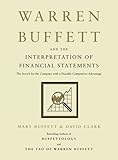
Warren Buffett and the Interpretation of Financial Statements: The Search for the Company with a Durable Competitive Advantage
Amazon's Editorial Reviews:
Review
"Just as top musicians memorize scales, and the best golfers perfect swings at the driving range, investors who want sustainable, good returns must master the critical basics that Mary Buffett and David Clark lay out for us in this clear explanation of Warren Buffett's methods. I don't think there has been a better time for investors to relearn the fundamentals. Follow these methods and you will see results!" - Timothy P. Vick, senior portfolio manager, The Sanibel Captiva Trust Company, and author of How to Pick Stocks
Like Warren Buffett
Product Description
With an insider's view of the mind of the master, Mary Buffett and David Clark have written a simple guide for reading financial statements from Warren Buffett's succccessful perspective.
Buffett and Clark clearly outline Warren Buffett's strategies in a way that will appeal to newcomers and seasoned Buffettologists alike. Inspired by the seminal work of Buffett's mentor, Benjamin Graham (The Interpretation of Financial Statements, 1937), this book presents Buffett's interpretation of financial statements with anecdotes and quotes from the master investor himself.
Potential investors will discover:
• Buffett's time-tested dos and don'ts for interpreting an income statement and balance sheet
• Why high research and development costs can kill a great business
• How much debt Buffett thinks a company can carry before it becomes too dangerous to touch
• The financial ratios and calculations that Buffett uses to identify the company with a durable competitive advantage -- which he believes makes for the winning long-term investment
• How Buffett uses financial statements to value a company
• What kinds of companies Warren stays away from no matter how cheap their selling price
Once readers complete and master Buffett's simple financial calculations and methods for interpreting a company's financial statement, they'll be well on their way to identifying which companies are going to be tomorrow's winners -- and which will be the losers they should avoid at all costs.
Destined to become a classic in the world of investment books, Warren Buffett and the Interpretation of Financial Statements is the perfect companion volume to The New Buffettology and The Tao of Warren Buffett.
About the Author
Mary Buffett is an author and lecturer on investing and was married to Warren's son Peter for twelve years. She and David Clark -- a longtime friend of the Buffett family who is a portfolio manager, attorney, and lecturer on the subject of Buffettology -- are the bestselling authors of the internationally acclaimed investment books Buffettology, The New Buffettology, and The Buffettology Workbook.
Mary Buffett is an author and lecturer on investing and was married to Warren's son Peter for twelve years. She and David Clark -- a longtime friend of the Buffett family who is a portfolio manager, attorney, and lecturer on the subject of Buffettology -- are the bestselling authors of the internationally acclaimed investment books Buffettology, The New Buffettology, and The Buffettology Workbook.

Review
"Just as top musicians memorize scales, and the best golfers perfect swings at the driving range, investors who want sustainable, good returns must master the critical basics that Mary Buffett and David Clark lay out for us in this clear explanation of Warren Buffett's methods. I don't think there has been a better time for investors to relearn the fundamentals. Follow these methods and you will see results!" - Timothy P. Vick, senior portfolio manager, The Sanibel Captiva Trust Company, and author of How to Pick Stocks
Like Warren Buffett
Product Description
With an insider's view of the mind of the master, Mary Buffett and David Clark have written a simple guide for reading financial statements from Warren Buffett's succccessful perspective.
Buffett and Clark clearly outline Warren Buffett's strategies in a way that will appeal to newcomers and seasoned Buffettologists alike. Inspired by the seminal work of Buffett's mentor, Benjamin Graham (The Interpretation of Financial Statements, 1937), this book presents Buffett's interpretation of financial statements with anecdotes and quotes from the master investor himself.
Potential investors will discover:
• Buffett's time-tested dos and don'ts for interpreting an income statement and balance sheet
• Why high research and development costs can kill a great business
• How much debt Buffett thinks a company can carry before it becomes too dangerous to touch
• The financial ratios and calculations that Buffett uses to identify the company with a durable competitive advantage -- which he believes makes for the winning long-term investment
• How Buffett uses financial statements to value a company
• What kinds of companies Warren stays away from no matter how cheap their selling price
Once readers complete and master Buffett's simple financial calculations and methods for interpreting a company's financial statement, they'll be well on their way to identifying which companies are going to be tomorrow's winners -- and which will be the losers they should avoid at all costs.
Destined to become a classic in the world of investment books, Warren Buffett and the Interpretation of Financial Statements is the perfect companion volume to The New Buffettology and The Tao of Warren Buffett.
About the Author
Mary Buffett is an author and lecturer on investing and was married to Warren's son Peter for twelve years. She and David Clark -- a longtime friend of the Buffett family who is a portfolio manager, attorney, and lecturer on the subject of Buffettology -- are the bestselling authors of the internationally acclaimed investment books Buffettology, The New Buffettology, and The Buffettology Workbook.
Mary Buffett is an author and lecturer on investing and was married to Warren's son Peter for twelve years. She and David Clark -- a longtime friend of the Buffett family who is a portfolio manager, attorney, and lecturer on the subject of Buffettology -- are the bestselling authors of the internationally acclaimed investment books Buffettology, The New Buffettology, and The Buffettology Workbook.
Thursday, December 18, 2008
Adam Khoo's Secrets Of Millionaire Investors
There are a lot of books out there on how to become a millionaire, and quite a few on investing as well. Mostly, they’re disappointing. The millionaire books might be inspirational, the good ones anyway, and they may have some advice that’s useful, but in order to actually making them work, you would have to sign up for follow-up seminars and the special, proprietary coaching programs of the authors, all of them expensive.
And about those books on investments – they tend to be disappointing for a different reason: Either they’re too basic and conservative, in the vein of promising you that you too can become a millionaire if you invest 10% of your salary for the next 40 years.
Or they are, once again, too vague. They might provide introductions into some of the basics of certain aspects of stock trading, but if you’d try to actually follow their advice, you’d soon find yourself in hot water.
Not so with Adam Khoo and Conrad Lim’s book, Secrets of Millionaire Investors. Just from looking at the title, I would have probably expected more of the same. But Adam and Conrad actually provide the blueprints – and the details – on how to make investing work.
The book starts with a bang – taking us right into the world of trading stocks, and the challenges Adam faced during his first attempts at making it work. Let’s just say it wasn’t a pretty sight. For two years, he played it safe after that.
But the failures were just stepping stones, prompting Adam to seek out mentors and models from whom he could learn, something he discusses in much detail in some of his other books, for example in Master Your Mind and in Secrets of Self-Made Millionaires.
His key role model: Warren Buffett, arguably the world’s most successful investor. He studied what Buffett had done and quickly saw where he himself had gone wrong. His other investing books were of the sort I mentioned above – providing good but incomplete information, and Adam learned the hard way that a little knowledge, even if it’s good, can be very dangerous.
So he set out to learn everything he needed to know to become a successful investor, and started to apply what he learned. First he focused on Singapore, but he quickly moved on to the U.S. stock market, a much more dynamic marketplace.
But even skilled investing in the stock market only gets you so far. He soon noticed that some of his friends doubled their money in weeks... by buying options.
So he attended seminars and quickly expanded his expertise to options as well.
Next, Adam’s co-author, Conrad Lim, shares his own rags-to-riches story. He decided to learn about the stock market after going through several business failures and a bankruptcy. I actually find that inspiring. It means that even after thorough failure, you have a chance to better yourself, and become wealthy.
On his quest to learn about the stock market, Conrad too suffered the failures caused by good but incomplete information. He quickly learned from his mistakes, though, and slowly, he was making gains. After about a year, he was consistently earning a nice full-time income just from trading stocks, and things went uphill from there. He went from failure to becoming someone people sought out for advice.
Next, the book goes into the meat of investing, starting by dispelling the myths perpetrated by most of the other books, especially the one about the correlation between low risk and low return on one side, and high risk and high return on the other.
A poignant quote by Warren Buffett underlines that point:
“Risk Comes from Not Knowing What You Are Doing”
And that’s the situation the book sets out to remedy. I was amazed at the wealth of detail the book went into – efficiently and clearly explained in its 272 pages. And not just regular stock investing either, but all the fancy stuff, including options and short-selling.
Here’s some of the kind of information covered in this book:
1. Basic principles of how the stock market works, and how to work the stock market successfully, including such gems as how to make sure you get out early if you picked the wrong stock without getting burned too badly.
2. In a chapter, called “The Idiot Proof Way To Making Money” the authors explain the first and most basic system for making money in stocks. They argue that with the information they provide, it’s possible to achieve just about risk-free annual returns. The only “skill” you need is patience.
Have you ever been at those teaser investment seminars, where they tell you about surefire ways to make money in the stock market and show you some fancy charts that they say will tell you exactly when to buy and sell and so on? I have. And then they say that we’d get all the info we need to actually apply this information if we bought into their $5000 or so program.
Reading this chapter brought back those memories because all the charts they showed (and many more) are right here in this book, starting with this chapter. The difference: They’re explained in so much detail that you can actually apply that knowledge. That’s when I really started to pay attention. This was good stuff.
It teaches you how to buy, how to sell, when to buy and sell, and so much more. The “more” is key, of course. If you did just the idiot proof techniques, you could make a nice chunk of change, but it would probably be hard to become really wealthy that way. That’s why the authors added many ways to turbo-charge the process. And, something very important, especially when the economy goes through challenging times – they’ve provided plenty of ways to make money no matter what the economy does.
The next chapter is about Value Investing, Warren Buffett’s secret. But this goes way beyond the kind of information you can buy at a regular bookstore. And one of the key skills you learn in this chapter: How to evaluate a business and the potential of its stock – in great depth! Worksheets are provided.
Next, something really cool: “Momentum Investing.” I must admit that I had never even heard of that before. The idea is that you catch stocks that are about they take off and rise in value so quickly that most other people don’t catch on till they have to buy them at a premium. Many detailed charts and instructions help you to figure out which stocks are good candidates, and how to catch them just before they hit it big.
Of course, what goes up often comes down, either temporarily or, sometimes, permanently. So this chapter also provides detailed strategies on how you can protect yourself from losing what you’ve just earned.
If the book ended here, it would have already surpassed my expectations, as well as most of what you can find elsewhere, and probably most of those $5000 seminars as well.
But it doesn’t end here. It goes on to cover stock options, the real secret to making lots of money in the stock market, and quickly. Of course, you can also lose your shirt, but after learning and carefully applying all the strategies in this offer, that chance is much reduced.
The beauty of stock options, according to Adam and Conrad, is that you can make money with them in any kind of economic climate, that results can come quickly, and that you can leverage whatever funds you have by controlling a much larger amount of money. That is also the key to the risk, which is why options are something to be approached with caution – and knowledge of how they work.
There are a few warnings in this chapter. Don’t try this at home... (unless you know what you’re doing). Yet there are also techniques that are much less risky – and the authors point them out and proceed to explain them so thoroughly, I wanted to stop reading the rest of the book and just have a go at them.
In fact, options are really the heart of this book. They are the key to making significant financial gains in a short amount of time, and so they get a lot of extra coverage. How they work, how to understand the information you need to gather to make informed decisions about them, and how to best go about making money with them.
There’s even a super safe way to make money with options. Yes, you can still lose money but the amount is very limited – and you stand to gain a great deal if your bet pays off. Plus, of course, with the information you have gathered using the other techniques, your bet will always be informed.
Another whole chapter is devoted to the fine art of short selling, a technique that can pay off big during bear markets. You’ve probably read about them in the paper. Well, here’s how to do it, and, of course, with lots and lots of detailed info along with work sheets for help with assessing funds and their performance so your chances at success are maximized.
The last chapter guides you towards putting all this information into action. Once again, it comes with work sheets you can use to assess your risk and the probable movement of the stocks. And advice on how to keep track of your gains and losses so you can tweak your system and make it turn mostly profits.
All in all – it’s an outstanding guide to how to make money in the stock market – with charts and plenty of work sheets where you can track and evaluate the stocks you’re interested in.
It’s a how-to book that really lives up to its name. Just one small disappointment – there were a few places where the authors mention some even more advanced strategies, which are only available to members of their proprietary Wealth Academy program. So there’s still a bit of the old tease.
But on the other hand, the book provides a wealth of actionable information, which is plenty to keep its readers busy for a long time, and, if they apply it diligently, it should quickly pay for Adam’s Wealth Academy program, where they learn to accelerate their income even more.
And come to think of it, there’s always more to learn, and considering the value that this book provides, the fact that Adam and Conrad offer a way to learn even more is actually great news.
Click here to learn more
And about those books on investments – they tend to be disappointing for a different reason: Either they’re too basic and conservative, in the vein of promising you that you too can become a millionaire if you invest 10% of your salary for the next 40 years.
Or they are, once again, too vague. They might provide introductions into some of the basics of certain aspects of stock trading, but if you’d try to actually follow their advice, you’d soon find yourself in hot water.
Not so with Adam Khoo and Conrad Lim’s book, Secrets of Millionaire Investors. Just from looking at the title, I would have probably expected more of the same. But Adam and Conrad actually provide the blueprints – and the details – on how to make investing work.
The book starts with a bang – taking us right into the world of trading stocks, and the challenges Adam faced during his first attempts at making it work. Let’s just say it wasn’t a pretty sight. For two years, he played it safe after that.
But the failures were just stepping stones, prompting Adam to seek out mentors and models from whom he could learn, something he discusses in much detail in some of his other books, for example in Master Your Mind and in Secrets of Self-Made Millionaires.
His key role model: Warren Buffett, arguably the world’s most successful investor. He studied what Buffett had done and quickly saw where he himself had gone wrong. His other investing books were of the sort I mentioned above – providing good but incomplete information, and Adam learned the hard way that a little knowledge, even if it’s good, can be very dangerous.
So he set out to learn everything he needed to know to become a successful investor, and started to apply what he learned. First he focused on Singapore, but he quickly moved on to the U.S. stock market, a much more dynamic marketplace.
But even skilled investing in the stock market only gets you so far. He soon noticed that some of his friends doubled their money in weeks... by buying options.
So he attended seminars and quickly expanded his expertise to options as well.
Next, Adam’s co-author, Conrad Lim, shares his own rags-to-riches story. He decided to learn about the stock market after going through several business failures and a bankruptcy. I actually find that inspiring. It means that even after thorough failure, you have a chance to better yourself, and become wealthy.
On his quest to learn about the stock market, Conrad too suffered the failures caused by good but incomplete information. He quickly learned from his mistakes, though, and slowly, he was making gains. After about a year, he was consistently earning a nice full-time income just from trading stocks, and things went uphill from there. He went from failure to becoming someone people sought out for advice.
Next, the book goes into the meat of investing, starting by dispelling the myths perpetrated by most of the other books, especially the one about the correlation between low risk and low return on one side, and high risk and high return on the other.
A poignant quote by Warren Buffett underlines that point:
“Risk Comes from Not Knowing What You Are Doing”
And that’s the situation the book sets out to remedy. I was amazed at the wealth of detail the book went into – efficiently and clearly explained in its 272 pages. And not just regular stock investing either, but all the fancy stuff, including options and short-selling.
Here’s some of the kind of information covered in this book:
1. Basic principles of how the stock market works, and how to work the stock market successfully, including such gems as how to make sure you get out early if you picked the wrong stock without getting burned too badly.
2. In a chapter, called “The Idiot Proof Way To Making Money” the authors explain the first and most basic system for making money in stocks. They argue that with the information they provide, it’s possible to achieve just about risk-free annual returns. The only “skill” you need is patience.
Have you ever been at those teaser investment seminars, where they tell you about surefire ways to make money in the stock market and show you some fancy charts that they say will tell you exactly when to buy and sell and so on? I have. And then they say that we’d get all the info we need to actually apply this information if we bought into their $5000 or so program.
Reading this chapter brought back those memories because all the charts they showed (and many more) are right here in this book, starting with this chapter. The difference: They’re explained in so much detail that you can actually apply that knowledge. That’s when I really started to pay attention. This was good stuff.
It teaches you how to buy, how to sell, when to buy and sell, and so much more. The “more” is key, of course. If you did just the idiot proof techniques, you could make a nice chunk of change, but it would probably be hard to become really wealthy that way. That’s why the authors added many ways to turbo-charge the process. And, something very important, especially when the economy goes through challenging times – they’ve provided plenty of ways to make money no matter what the economy does.
The next chapter is about Value Investing, Warren Buffett’s secret. But this goes way beyond the kind of information you can buy at a regular bookstore. And one of the key skills you learn in this chapter: How to evaluate a business and the potential of its stock – in great depth! Worksheets are provided.
Next, something really cool: “Momentum Investing.” I must admit that I had never even heard of that before. The idea is that you catch stocks that are about they take off and rise in value so quickly that most other people don’t catch on till they have to buy them at a premium. Many detailed charts and instructions help you to figure out which stocks are good candidates, and how to catch them just before they hit it big.
Of course, what goes up often comes down, either temporarily or, sometimes, permanently. So this chapter also provides detailed strategies on how you can protect yourself from losing what you’ve just earned.
If the book ended here, it would have already surpassed my expectations, as well as most of what you can find elsewhere, and probably most of those $5000 seminars as well.
But it doesn’t end here. It goes on to cover stock options, the real secret to making lots of money in the stock market, and quickly. Of course, you can also lose your shirt, but after learning and carefully applying all the strategies in this offer, that chance is much reduced.
The beauty of stock options, according to Adam and Conrad, is that you can make money with them in any kind of economic climate, that results can come quickly, and that you can leverage whatever funds you have by controlling a much larger amount of money. That is also the key to the risk, which is why options are something to be approached with caution – and knowledge of how they work.
There are a few warnings in this chapter. Don’t try this at home... (unless you know what you’re doing). Yet there are also techniques that are much less risky – and the authors point them out and proceed to explain them so thoroughly, I wanted to stop reading the rest of the book and just have a go at them.
In fact, options are really the heart of this book. They are the key to making significant financial gains in a short amount of time, and so they get a lot of extra coverage. How they work, how to understand the information you need to gather to make informed decisions about them, and how to best go about making money with them.
There’s even a super safe way to make money with options. Yes, you can still lose money but the amount is very limited – and you stand to gain a great deal if your bet pays off. Plus, of course, with the information you have gathered using the other techniques, your bet will always be informed.
Another whole chapter is devoted to the fine art of short selling, a technique that can pay off big during bear markets. You’ve probably read about them in the paper. Well, here’s how to do it, and, of course, with lots and lots of detailed info along with work sheets for help with assessing funds and their performance so your chances at success are maximized.
The last chapter guides you towards putting all this information into action. Once again, it comes with work sheets you can use to assess your risk and the probable movement of the stocks. And advice on how to keep track of your gains and losses so you can tweak your system and make it turn mostly profits.
All in all – it’s an outstanding guide to how to make money in the stock market – with charts and plenty of work sheets where you can track and evaluate the stocks you’re interested in.
It’s a how-to book that really lives up to its name. Just one small disappointment – there were a few places where the authors mention some even more advanced strategies, which are only available to members of their proprietary Wealth Academy program. So there’s still a bit of the old tease.
But on the other hand, the book provides a wealth of actionable information, which is plenty to keep its readers busy for a long time, and, if they apply it diligently, it should quickly pay for Adam’s Wealth Academy program, where they learn to accelerate their income even more.
And come to think of it, there’s always more to learn, and considering the value that this book provides, the fact that Adam and Conrad offer a way to learn even more is actually great news.
Click here to learn more
Sunday, December 7, 2008
Averaging the shares you are holding.
The advise always given is that the shares market is risky and its for the rich to play. When its having Financial Crisis, don't go into the shares market.
I somewhat disagreed with the statement, if you don't buy during Financial Crisis (all shares are at discounted price), then when can you buy? Some will advise during the bull, all price is at the high, so again, don't buy is the advise given. When is the right time to buy?
The best time to buy is when a company's shares price is at the bottom, but how will you know when is the bottom? I think even the experts will not be able to give u that answer.
If you have buy 10000 shares of ABC at $1.00, and later it dropped to $0.80. You should buy another 10000 shares again to average out the price to $0.90. If the price goes up back to $1.00, you can sell all the shares for profit, if it drop further, just wait for another to buy at a lower price. This example can be used when you have the amount of money to buy 30000 shares, so instate of buying 30000 shares at one go, you divided it into 3 buys. That is why when the prices dropped, you can still earn money when it go back to the original price of $1.
I somewhat disagreed with the statement, if you don't buy during Financial Crisis (all shares are at discounted price), then when can you buy? Some will advise during the bull, all price is at the high, so again, don't buy is the advise given. When is the right time to buy?
The best time to buy is when a company's shares price is at the bottom, but how will you know when is the bottom? I think even the experts will not be able to give u that answer.
If you have buy 10000 shares of ABC at $1.00, and later it dropped to $0.80. You should buy another 10000 shares again to average out the price to $0.90. If the price goes up back to $1.00, you can sell all the shares for profit, if it drop further, just wait for another to buy at a lower price. This example can be used when you have the amount of money to buy 30000 shares, so instate of buying 30000 shares at one go, you divided it into 3 buys. That is why when the prices dropped, you can still earn money when it go back to the original price of $1.
Thursday, December 4, 2008
No swift resolution for Lehman Minibond holders
Below is an article extracted from Yahoo News on 4 Dec 08.
Channel NewsAsia.
SINGAPORE: Lehman Minibond holders will not be getting a swift resolution for their investments, according to an update by note trustee, HSBC Institutional Trust Services, and the note’s three receivers who are partners from PricewaterhouseCoopers (PwC).
That is because the unwinding process is expected to take years due to legal issues.
Lehman Minibond holders were told in mid—November that they would know by the end of the month what their options were — which could either be a restructuring of the notes or liquidation.
But PwC said that for Minibond Series 5 to 8, this can only happen after "orderly, step—by—step unwinding of the Minibond note structures, including the various swaps in the structures", and this involves a process that might see prolonged litigation.
Lawyers acting for bankruptcy proceedings for Lehman Brothers in the United States have reserved the right to challenge all aspects of the unwinding process.
HSBC and PwC said they could not give any valuations right now, but they promise to safeguard the interests of note—holders. As the unwinding process is likely to take considerable time, the restructuring proposals previously received are no longer an option now.
The process for Minibond Series 9 and 10 is expected to be less complicated and slightly faster as the underlying securities for these series are corporate bonds and have no swaps.
Even though Minibond Series 1, 2 and 3 have not defaulted yet, they are expected to go into default soon and holders would face the same process as those who bought Series 9 and 10.
The Monetary Authority of Singapore (MAS) said it has asked the trustee and receivers to resolve legal issues as quickly as possible and to take all necessary steps within their powers to safeguard note—holders’ interests.
MAS said the legal issues will not affect the complaint process that was set out earlier, and it would continue to keep note—holders updated on developments.
Channel NewsAsia.
SINGAPORE: Lehman Minibond holders will not be getting a swift resolution for their investments, according to an update by note trustee, HSBC Institutional Trust Services, and the note’s three receivers who are partners from PricewaterhouseCoopers (PwC).
That is because the unwinding process is expected to take years due to legal issues.
Lehman Minibond holders were told in mid—November that they would know by the end of the month what their options were — which could either be a restructuring of the notes or liquidation.
But PwC said that for Minibond Series 5 to 8, this can only happen after "orderly, step—by—step unwinding of the Minibond note structures, including the various swaps in the structures", and this involves a process that might see prolonged litigation.
Lawyers acting for bankruptcy proceedings for Lehman Brothers in the United States have reserved the right to challenge all aspects of the unwinding process.
HSBC and PwC said they could not give any valuations right now, but they promise to safeguard the interests of note—holders. As the unwinding process is likely to take considerable time, the restructuring proposals previously received are no longer an option now.
The process for Minibond Series 9 and 10 is expected to be less complicated and slightly faster as the underlying securities for these series are corporate bonds and have no swaps.
Even though Minibond Series 1, 2 and 3 have not defaulted yet, they are expected to go into default soon and holders would face the same process as those who bought Series 9 and 10.
The Monetary Authority of Singapore (MAS) said it has asked the trustee and receivers to resolve legal issues as quickly as possible and to take all necessary steps within their powers to safeguard note—holders’ interests.
MAS said the legal issues will not affect the complaint process that was set out earlier, and it would continue to keep note—holders updated on developments.
Tuesday, December 2, 2008
Lesson learn - Stock Market Trading.
Does anyone invest in stock market as a newbies actually know how the stock market trading work?
I only get to know that I can buy and sell shares and I have to pay a commission for each sales transaction.
The things I found out is that:
1) The commission is $25 or 0.28% whichever is lower (based on what the T&C stated on the application form you signed on).
2) If you buy the same counters (eg. Singtel shares) twice or more in a day, then the commission charged is the total amount of share you buy for the day.
eg. - I buy 10000 Singtel Shares at 10am, then I buy another 10000 Singtel shares at 11am. The commission I pay for this two transaction will be $25 or 0.28% whichever is higher.
There is also other option of trading mode but I have yet to explore. Will update it here when I get a hand on it.
Stay tune and visit for more updates.
I only get to know that I can buy and sell shares and I have to pay a commission for each sales transaction.
The things I found out is that:
1) The commission is $25 or 0.28% whichever is lower (based on what the T&C stated on the application form you signed on).
2) If you buy the same counters (eg. Singtel shares) twice or more in a day, then the commission charged is the total amount of share you buy for the day.
eg. - I buy 10000 Singtel Shares at 10am, then I buy another 10000 Singtel shares at 11am. The commission I pay for this two transaction will be $25 or 0.28% whichever is higher.
There is also other option of trading mode but I have yet to explore. Will update it here when I get a hand on it.
Stay tune and visit for more updates.
Sunday, October 26, 2008
Financial Crisis 2008
Due to recent Financial Crisis, I have been hearing lots of people saying the market is bad and not the right time to invest. I feel its right and wrong to say that.
If its not the right time to invest in a sound and stable company at a discount price then when will be the correct time? Of course, if the market is in the down trend you will hold and stop buying. Once the downtrend is slow down, you can start to buy bit by bit and not throw all the cash you have, thinking its at the bottom price.
Why I feel it right not to invest at this moment is because most people will buy based purely on the price and not study the fundamental of the company. Once they feel the price is low, they just buy with all the cash they have. No one in the world can predict or tell you when is the price at the bottom.
My advise is to invest with you knowledge and not based purely on the price. If you do so, then you will not have to worry when the price drop.
If its not the right time to invest in a sound and stable company at a discount price then when will be the correct time? Of course, if the market is in the down trend you will hold and stop buying. Once the downtrend is slow down, you can start to buy bit by bit and not throw all the cash you have, thinking its at the bottom price.
Why I feel it right not to invest at this moment is because most people will buy based purely on the price and not study the fundamental of the company. Once they feel the price is low, they just buy with all the cash they have. No one in the world can predict or tell you when is the price at the bottom.
My advise is to invest with you knowledge and not based purely on the price. If you do so, then you will not have to worry when the price drop.
Wednesday, August 13, 2008
Compound interest
Compound interest means interests earned being added back to your principal amount for next interest earn.
Example:
In year 2006 you have $1000 in bank earning 1% per annual.
Your 2006 year end statement will show $1010, which is $10 interest earned.
Your 2007 year end statement will show $1020.1, provided you don't withdraw that $10 interest out and leave it in your account to compounded.
So what so great about compound interest? If you know the rule of 72, then you will know when your principal amount will double.
Example:
You have $10000 in your bank with interest rate of 3%. Your $10000 will double in 24 years. (72/3 = 24)
If you have $10000 with interest rate of 6%, then it will double in 12 years. (72/6 = 12)
This compound interest can be applied not only to saving but also to investment that have annual return.
That mean the earlier you start saving or investing with higher interest rate or return, the faster your amount will double.
Example:
In year 2006 you have $1000 in bank earning 1% per annual.
Your 2006 year end statement will show $1010, which is $10 interest earned.
Your 2007 year end statement will show $1020.1, provided you don't withdraw that $10 interest out and leave it in your account to compounded.
So what so great about compound interest? If you know the rule of 72, then you will know when your principal amount will double.
Example:
You have $10000 in your bank with interest rate of 3%. Your $10000 will double in 24 years. (72/3 = 24)
If you have $10000 with interest rate of 6%, then it will double in 12 years. (72/6 = 12)
This compound interest can be applied not only to saving but also to investment that have annual return.
That mean the earlier you start saving or investing with higher interest rate or return, the faster your amount will double.
Saturday, August 2, 2008
Third Step to Financial Freedom
Set your financial goal. A goal that will give you financial freedom.
My goal is to have my first million saving at age 40.
So I have ten years to achieve it.
So I got to save:
$100000/year.
$8334/mth.
$269/day.
If I depend on my current job, I will not be able to make it. So I got to have 2nd, 3rd and maybe 4th sources of income in order to achieve my financial goal.
I have already invest in Singapore stocks but due to the sub-prime crisis and US financial credit crisis, I am in the red zone.
Some of the stock I am holding:
1) China Energy
2) Chasen
3) Gent Int
4) Orchard Parade
5) Synear
6) Sky Petrol
7) Yongnam
It still not enough by holding this stock if they don't earn me any money and I won't be able to reach my goal. But at least I set my goal and will keep monitoring till I reach it. My next move will be setting up online business once I get the know-how to get web traffic.
My goal is to have my first million saving at age 40.
So I have ten years to achieve it.
So I got to save:
$100000/year.
$8334/mth.
$269/day.
If I depend on my current job, I will not be able to make it. So I got to have 2nd, 3rd and maybe 4th sources of income in order to achieve my financial goal.
I have already invest in Singapore stocks but due to the sub-prime crisis and US financial credit crisis, I am in the red zone.
Some of the stock I am holding:
1) China Energy
2) Chasen
3) Gent Int
4) Orchard Parade
5) Synear
6) Sky Petrol
7) Yongnam
It still not enough by holding this stock if they don't earn me any money and I won't be able to reach my goal. But at least I set my goal and will keep monitoring till I reach it. My next move will be setting up online business once I get the know-how to get web traffic.
Thursday, June 26, 2008
Investing
Investing mean using your extra money to buy something which you have done research on and know that it will grow in a decent amount of money in future. eg, Stocks and property.
In order to start investing, you must have no bad debt and have at least 6 months of expenses saving in your saving account left untouch.
Do your homework before doing any investment and it will reduce your risk of losing all your money.
Warren Buffett, the world richest guy, always do his homework before buying stocks. If you ask him about the company financial status and the operation, he will be able to answer because he would buy any company he don't know at all.
Donald Trump, the real estate developer, also do his homework before investing his hard earn money into property.
There isn't any easy money making ways, you put in hard work, you will earn what you deserve.
In order to start investing, you must have no bad debt and have at least 6 months of expenses saving in your saving account left untouch.
Do your homework before doing any investment and it will reduce your risk of losing all your money.
Warren Buffett, the world richest guy, always do his homework before buying stocks. If you ask him about the company financial status and the operation, he will be able to answer because he would buy any company he don't know at all.
Donald Trump, the real estate developer, also do his homework before investing his hard earn money into property.
There isn't any easy money making ways, you put in hard work, you will earn what you deserve.
Subscribe to:
Posts (Atom)