Showing posts with label Finance. Show all posts

Sunday, December 21, 2008

Get paid to read Email.

Want to earn passive income?

You may be asking how. Its simple, just follow the steps below.

- Click here to join as member.
- open up the email sent to you.
- ask more frds to join under you.

Click on the banner to get started.

http://www.emailcashpro.com

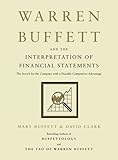
Warren Buffett and the Interpretation of Financial Statements: The Search for the Company with a Durable Competitive Advantage

Amazon's Editorial Reviews:

Review
"Just as top musicians memorize scales, and the best golfers perfect swings at the driving range, investors who want sustainable, good returns must master the critical basics that Mary Buffett and David Clark lay out for us in this clear explanation of Warren Buffett's methods. I don't think there has been a better time for investors to relearn the fundamentals. Follow these methods and you will see results!" - Timothy P. Vick, senior portfolio manager, The Sanibel Captiva Trust Company, and author of How to Pick Stocks
Like Warren Buffett

Product Description

With an insider's view of the mind of the master, Mary Buffett and David Clark have written a simple guide for reading financial statements from Warren Buffett's succccessful perspective.

Buffett and Clark clearly outline Warren Buffett's strategies in a way that will appeal to newcomers and seasoned Buffettologists alike. Inspired by the seminal work of Buffett's mentor, Benjamin Graham (The Interpretation of Financial Statements, 1937), this book presents Buffett's interpretation of financial statements with anecdotes and quotes from the master investor himself.

Potential investors will discover:

• Buffett's time-tested dos and don'ts for interpreting an income statement and balance sheet
• Why high research and development costs can kill a great business
• How much debt Buffett thinks a company can carry before it becomes too dangerous to touch
• The financial ratios and calculations that Buffett uses to identify the company with a durable competitive advantage -- which he believes makes for the winning long-term investment
• How Buffett uses financial statements to value a company
• What kinds of companies Warren stays away from no matter how cheap their selling price

Once readers complete and master Buffett's simple financial calculations and methods for interpreting a company's financial statement, they'll be well on their way to identifying which companies are going to be tomorrow's winners -- and which will be the losers they should avoid at all costs.

Destined to become a classic in the world of investment books, Warren Buffett and the Interpretation of Financial Statements is the perfect companion volume to The New Buffettology and The Tao of Warren Buffett.

About the Author
Mary Buffett is an author and lecturer on investing and was married to Warren's son Peter for twelve years. She and David Clark -- a longtime friend of the Buffett family who is a portfolio manager, attorney, and lecturer on the subject of Buffettology -- are the bestselling authors of the internationally acclaimed investment books Buffettology, The New Buffettology, and The Buffettology Workbook.

Mary Buffett is an author and lecturer on investing and was married to Warren's son Peter for twelve years. She and David Clark -- a longtime friend of the Buffett family who is a portfolio manager, attorney, and lecturer on the subject of Buffettology -- are the bestselling authors of the internationally acclaimed investment books Buffettology, The New Buffettology, and The Buffettology Workbook.

Thursday, December 18, 2008

Adam Khoo's Secrets Of Millionaire Investors

There are a lot of books out there on how to become a millionaire, and quite a few on investing as well. Mostly, they’re disappointing. The millionaire books might be inspirational, the good ones anyway, and they may have some advice that’s useful, but in order to actually making them work, you would have to sign up for follow-up seminars and the special, proprietary coaching programs of the authors, all of them expensive.

And about those books on investments – they tend to be disappointing for a different reason: Either they’re too basic and conservative, in the vein of promising you that you too can become a millionaire if you invest 10% of your salary for the next 40 years.

Or they are, once again, too vague. They might provide introductions into some of the basics of certain aspects of stock trading, but if you’d try to actually follow their advice, you’d soon find yourself in hot water.

Not so with Adam Khoo and Conrad Lim’s book, Secrets of Millionaire Investors. Just from looking at the title, I would have probably expected more of the same. But Adam and Conrad actually provide the blueprints – and the details – on how to make investing work.

The book starts with a bang – taking us right into the world of trading stocks, and the challenges Adam faced during his first attempts at making it work. Let’s just say it wasn’t a pretty sight. For two years, he played it safe after that.

But the failures were just stepping stones, prompting Adam to seek out mentors and models from whom he could learn, something he discusses in much detail in some of his other books, for example in Master Your Mind and in Secrets of Self-Made Millionaires.

His key role model: Warren Buffett, arguably the world’s most successful investor. He studied what Buffett had done and quickly saw where he himself had gone wrong. His other investing books were of the sort I mentioned above – providing good but incomplete information, and Adam learned the hard way that a little knowledge, even if it’s good, can be very dangerous.

So he set out to learn everything he needed to know to become a successful investor, and started to apply what he learned. First he focused on Singapore, but he quickly moved on to the U.S. stock market, a much more dynamic marketplace.

But even skilled investing in the stock market only gets you so far. He soon noticed that some of his friends doubled their money in weeks... by buying options.

So he attended seminars and quickly expanded his expertise to options as well.

Next, Adam’s co-author, Conrad Lim, shares his own rags-to-riches story. He decided to learn about the stock market after going through several business failures and a bankruptcy. I actually find that inspiring. It means that even after thorough failure, you have a chance to better yourself, and become wealthy.

On his quest to learn about the stock market, Conrad too suffered the failures caused by good but incomplete information. He quickly learned from his mistakes, though, and slowly, he was making gains. After about a year, he was consistently earning a nice full-time income just from trading stocks, and things went uphill from there. He went from failure to becoming someone people sought out for advice.

Next, the book goes into the meat of investing, starting by dispelling the myths perpetrated by most of the other books, especially the one about the correlation between low risk and low return on one side, and high risk and high return on the other.

A poignant quote by Warren Buffett underlines that point:

“Risk Comes from Not Knowing What You Are Doing”

And that’s the situation the book sets out to remedy. I was amazed at the wealth of detail the book went into – efficiently and clearly explained in its 272 pages. And not just regular stock investing either, but all the fancy stuff, including options and short-selling.

Here’s some of the kind of information covered in this book:

1. Basic principles of how the stock market works, and how to work the stock market successfully, including such gems as how to make sure you get out early if you picked the wrong stock without getting burned too badly.

2. In a chapter, called “The Idiot Proof Way To Making Money” the authors explain the first and most basic system for making money in stocks. They argue that with the information they provide, it’s possible to achieve just about risk-free annual returns. The only “skill” you need is patience.

Have you ever been at those teaser investment seminars, where they tell you about surefire ways to make money in the stock market and show you some fancy charts that they say will tell you exactly when to buy and sell and so on? I have. And then they say that we’d get all the info we need to actually apply this information if we bought into their $5000 or so program.

Reading this chapter brought back those memories because all the charts they showed (and many more) are right here in this book, starting with this chapter. The difference: They’re explained in so much detail that you can actually apply that knowledge. That’s when I really started to pay attention. This was good stuff.

It teaches you how to buy, how to sell, when to buy and sell, and so much more. The “more” is key, of course. If you did just the idiot proof techniques, you could make a nice chunk of change, but it would probably be hard to become really wealthy that way. That’s why the authors added many ways to turbo-charge the process. And, something very important, especially when the economy goes through challenging times – they’ve provided plenty of ways to make money no matter what the economy does.

The next chapter is about Value Investing, Warren Buffett’s secret. But this goes way beyond the kind of information you can buy at a regular bookstore. And one of the key skills you learn in this chapter: How to evaluate a business and the potential of its stock – in great depth! Worksheets are provided.

Next, something really cool: “Momentum Investing.” I must admit that I had never even heard of that before. The idea is that you catch stocks that are about they take off and rise in value so quickly that most other people don’t catch on till they have to buy them at a premium. Many detailed charts and instructions help you to figure out which stocks are good candidates, and how to catch them just before they hit it big.

Of course, what goes up often comes down, either temporarily or, sometimes, permanently. So this chapter also provides detailed strategies on how you can protect yourself from losing what you’ve just earned.

If the book ended here, it would have already surpassed my expectations, as well as most of what you can find elsewhere, and probably most of those $5000 seminars as well.

But it doesn’t end here. It goes on to cover stock options, the real secret to making lots of money in the stock market, and quickly. Of course, you can also lose your shirt, but after learning and carefully applying all the strategies in this offer, that chance is much reduced.

The beauty of stock options, according to Adam and Conrad, is that you can make money with them in any kind of economic climate, that results can come quickly, and that you can leverage whatever funds you have by controlling a much larger amount of money. That is also the key to the risk, which is why options are something to be approached with caution – and knowledge of how they work.

There are a few warnings in this chapter. Don’t try this at home... (unless you know what you’re doing). Yet there are also techniques that are much less risky – and the authors point them out and proceed to explain them so thoroughly, I wanted to stop reading the rest of the book and just have a go at them.

In fact, options are really the heart of this book. They are the key to making significant financial gains in a short amount of time, and so they get a lot of extra coverage. How they work, how to understand the information you need to gather to make informed decisions about them, and how to best go about making money with them.

There’s even a super safe way to make money with options. Yes, you can still lose money but the amount is very limited – and you stand to gain a great deal if your bet pays off. Plus, of course, with the information you have gathered using the other techniques, your bet will always be informed.

Another whole chapter is devoted to the fine art of short selling, a technique that can pay off big during bear markets. You’ve probably read about them in the paper. Well, here’s how to do it, and, of course, with lots and lots of detailed info along with work sheets for help with assessing funds and their performance so your chances at success are maximized.

The last chapter guides you towards putting all this information into action. Once again, it comes with work sheets you can use to assess your risk and the probable movement of the stocks. And advice on how to keep track of your gains and losses so you can tweak your system and make it turn mostly profits.

All in all – it’s an outstanding guide to how to make money in the stock market – with charts and plenty of work sheets where you can track and evaluate the stocks you’re interested in.

It’s a how-to book that really lives up to its name. Just one small disappointment – there were a few places where the authors mention some even more advanced strategies, which are only available to members of their proprietary Wealth Academy program. So there’s still a bit of the old tease.

But on the other hand, the book provides a wealth of actionable information, which is plenty to keep its readers busy for a long time, and, if they apply it diligently, it should quickly pay for Adam’s Wealth Academy program, where they learn to accelerate their income even more.

And come to think of it, there’s always more to learn, and considering the value that this book provides, the fact that Adam and Conrad offer a way to learn even more is actually great news.


Click here to learn more

Tuesday, December 9, 2008

How to make your money grow in the shortest time frame?

I just received a comments saying this: "How can your $1 make into $10 and in the shortest time frame?"

In order to do that, you must invest in something that give u 1000% return or sell an $1 item for 1000% profit.

But so far the most powerful investment instrument I have ever come across is compound interest. That is using the principal amount to earn interest and after that both the principal amount and the interest amount will earn you interest.

Example:

$1000 x 5% = $50

$1050 x 5% = $1102.50 and so on...

on the 15 years, the amount will be $2079.

Using the rule of 72, you will need 14.4 years to double your principal amount.

Pls give comments if you have better ways to make your money work hard for you.

Sunday, December 7, 2008

Averaging the shares you are holding.

The advise always given is that the shares market is risky and its for the rich to play. When its having Financial Crisis, don't go into the shares market.

I somewhat disagreed with the statement, if you don't buy during Financial Crisis (all shares are at discounted price), then when can you buy? Some will advise during the bull, all price is at the high, so again, don't buy is the advise given. When is the right time to buy?

The best time to buy is when a company's shares price is at the bottom, but how will you know when is the bottom? I think even the experts will not be able to give u that answer.

If you have buy 10000 shares of ABC at $1.00, and later it dropped to $0.80. You should buy another 10000 shares again to average out the price to $0.90. If the price goes up back to $1.00, you can sell all the shares for profit, if it drop further, just wait for another to buy at a lower price. This example can be used when you have the amount of money to buy 30000 shares, so instate of buying 30000 shares at one go, you divided it into 3 buys. That is why when the prices dropped, you can still earn money when it go back to the original price of $1.

Thursday, December 4, 2008

No swift resolution for Lehman Minibond holders

Below is an article extracted from Yahoo News on 4 Dec 08.

Channel NewsAsia.

SINGAPORE: Lehman Minibond holders will not be getting a swift resolution for their investments, according to an update by note trustee, HSBC Institutional Trust Services, and the note’s three receivers who are partners from PricewaterhouseCoopers (PwC).

That is because the unwinding process is expected to take years due to legal issues.

Lehman Minibond holders were told in mid—November that they would know by the end of the month what their options were — which could either be a restructuring of the notes or liquidation.

But PwC said that for Minibond Series 5 to 8, this can only happen after "orderly, step—by—step unwinding of the Minibond note structures, including the various swaps in the structures", and this involves a process that might see prolonged litigation.

Lawyers acting for bankruptcy proceedings for Lehman Brothers in the United States have reserved the right to challenge all aspects of the unwinding process.

HSBC and PwC said they could not give any valuations right now, but they promise to safeguard the interests of note—holders. As the unwinding process is likely to take considerable time, the restructuring proposals previously received are no longer an option now.

The process for Minibond Series 9 and 10 is expected to be less complicated and slightly faster as the underlying securities for these series are corporate bonds and have no swaps.

Even though Minibond Series 1, 2 and 3 have not defaulted yet, they are expected to go into default soon and holders would face the same process as those who bought Series 9 and 10.

The Monetary Authority of Singapore (MAS) said it has asked the trustee and receivers to resolve legal issues as quickly as possible and to take all necessary steps within their powers to safeguard note—holders’ interests.

MAS said the legal issues will not affect the complaint process that was set out earlier, and it would continue to keep note—holders updated on developments.

Tuesday, December 2, 2008

Lesson learn - Stock Market Trading.

Does anyone invest in stock market as a newbies actually know how the stock market trading work?

I only get to know that I can buy and sell shares and I have to pay a commission for each sales transaction.

The things I found out is that:

1) The commission is $25 or 0.28% whichever is lower (based on what the T&C stated on the application form you signed on).

2) If you buy the same counters (eg. Singtel shares) twice or more in a day, then the commission charged is the total amount of share you buy for the day.
eg. - I buy 10000 Singtel Shares at 10am, then I buy another 10000 Singtel shares at 11am. The commission I pay for this two transaction will be $25 or 0.28% whichever is higher.

There is also other option of trading mode but I have yet to explore. Will update it here when I get a hand on it.

Stay tune and visit for more updates.

Sunday, October 26, 2008

Financial Crisis 2008

Due to recent Financial Crisis, I have been hearing lots of people saying the market is bad and not the right time to invest. I feel its right and wrong to say that.

If its not the right time to invest in a sound and stable company at a discount price then when will be the correct time? Of course, if the market is in the down trend you will hold and stop buying. Once the downtrend is slow down, you can start to buy bit by bit and not throw all the cash you have, thinking its at the bottom price.

Why I feel it right not to invest at this moment is because most people will buy based purely on the price and not study the fundamental of the company. Once they feel the price is low, they just buy with all the cash they have. No one in the world can predict or tell you when is the price at the bottom.

My advise is to invest with you knowledge and not based purely on the price. If you do so, then you will not have to worry when the price drop.

Sunday, October 5, 2008

Credit Card Debt Interest.

Anyone know what is the interest charged by the credit card company when you don't pay in full for the month bill? In Singapore, it 24% per annum.

That means if you owed them $1000 after paying the min amt, you will have to pay them a interest $19.72. It going to compound till you pay off in full. Call the credit card company up and you will get the formula, as not all company will use the same formula.

So pls use the credit card wisely. Don't spend on things you can't afford and thinking that you can sign and pay by using next month salary.

Monday, September 29, 2008

Credit Card Debt

I have talked about this topic in one of my post but still I have friends who still having credit card debt.

Why is this still happening? The only reason I can think of is that this friend of mine doesn't have self-discipline and self-control.

He did clear the credit card debt once but due to him having at least two credit cards, after clearing the temptation came back and he couldn't resist it.

So how can this friend of mine clear this credit card debt and not having it again?

The only way out is to terminate all the credit card, since he doesn't have self-discipline and self-control, then do a debt consolidation. Look for a financial company and talk to them about your problem. They will be able to advise you according.

Alternatively, leave me a comment and I try my best to help.

Thursday, August 28, 2008

4 Steps to Financial Freedom By Sean Toh

Fours Steps To Financial Freedom

  • Step 1 - The road to financial freedom is to have great health so that you are in good shape to learn.

  • Step 2 - An open mindset to start learning and practicing what you have learned.

  • Step 3 - Investing your time in your financial & health education so that you are in control of your life to create wealth to enjoy a better life.

  • Step 4 - Enjoy the wealth that you have created because you have been taking care of your health.


  • Click here to find out how you can do it with the above 4 Steps to Financial Freedom

    Wednesday, August 27, 2008

    Warren Buffett's rule of success:

    1) Ascertain the true quality of a company and its top managers

    2) Stockholders are not managers. They should leave the running of a firm to competent managers with integrity.

    3) Don't invest in businesses you don't understand

    4) Give help and advise if they want it, but let the managers make their own decision

    5) Never, ever break the law

    6) Owners are owners and managers are managers - but they work as partners

    7) Keep your distance from the market. You will understand the business better.

    Sunday, August 17, 2008

    Why are you not rich yet?

    I have been thinking why am I still not rich yet. I am already 30 years old and I am still living every month by my paycheck.

    So what is the reason that I am not rich yet?

    - is it because I am lack of financial knowledge or education?

    - is it because that my job is taking up most of my time?

    - is it because I have a big family to support and I cant afford to lose my paycheck?

    - is it because no opportunity?

    There are some many reasons. What is the reason that are stopping you from getting rich then?

    Leave some comment for discussion purpose and we will work it out to achieve our goal.

    Thursday, August 14, 2008

    Saving for Marriage and House

    I have a request from MSN chatter to include on this topic.

    In Singapore, its not easy to get marry if you want to have a well done wedding and after that you want to have a house for the two of you.

    Now, its even more important to have a saving account for marriage and house.

    How much will you need?

    That will have to depend on what kind of wedding you and your other half want, and what kind of house you want and the renovation and furniture.

    For a normal wedding ceremony,

    - you need an amount of money to give to the girl family (in chinese called "ping jing") that will depend on how much the girl's parents want, and they will ask for a num of table for their use (normally is 5 - 10 tables). This is the cost you got to pay with cash. So if the girl's family ask for $888 and 10 tables ($700 per table), you got to come out with $7888.

    - you will have to spend around $3k to $5K on wedding custume and photos shooting. The more photos you want in your wedding album, the more you got to pay.

    - you must have at least $15K in your saving in case you didn't manage to get back the money from "Ang Bao" given by friends and relative during the wedding dinner. You can ask for temporary increase on credit limits from the credit card company to pay off the bill and get reward points. Pay off the bill once you have received the "Ang Bao" money and don't owe the credit card as they will charge you 24% per annum.

    That will added up to $888 + $5k + $15K = $20888 in saving for your wedding.

    Purchasing a house:

    - First hand unit: you need to pay for legal and stamp duty fee which I think is around $3000.

    - Second hand unit: you need to pay for legal and stamp duty and the value above valuation. That mean if you buy $20000 above valuation then you got to pay in full on this $20k, and also a 5% of the loan from private bank as first loan payment. eg. the second hand unit valuation @ $300000, Owner want $330000. So you pay the bank $30000 + (300000 * 5%) = $45000.

    - Renovation: a very basic renovation will cost you about $30000, that will include kitchen cabinet, wardrode, most of the wall and floor tiles, which is excluding electrical and kitchen/bathroom accessories. To add up all the cost to have a basic completed house done up will cost you around $40K - $50K.

    Start to save as early as possible so that you can plan what you want in life earlier and not wait till its time to do certain things then you start to panic.

    If you wait till last min then start to panic, that is when you need to borrow all the money from bank, which is your debt.

    Wednesday, August 13, 2008

    Compound interest

    Compound interest means interests earned being added back to your principal amount for next interest earn.

    Example:

    In year 2006 you have $1000 in bank earning 1% per annual.

    Your 2006 year end statement will show $1010, which is $10 interest earned.
    Your 2007 year end statement will show $1020.1, provided you don't withdraw that $10 interest out and leave it in your account to compounded.

    So what so great about compound interest? If you know the rule of 72, then you will know when your principal amount will double.

    Example:

    You have $10000 in your bank with interest rate of 3%. Your $10000 will double in 24 years. (72/3 = 24)

    If you have $10000 with interest rate of 6%, then it will double in 12 years. (72/6 = 12)

    This compound interest can be applied not only to saving but also to investment that have annual return.

    That mean the earlier you start saving or investing with higher interest rate or return, the faster your amount will double.

    Tuesday, August 12, 2008

    Stock Market for Beginners

    Before going into the stock market, you must understand what is stock market is and what it does.

    Basically, stock market is a place to trade shares of listed company in SGX (for Singapore), NYSE (for US) and so on.

    So how do you start to trade stock?

    First, go to any of the brokerage firm and open up a trading account and also a CDP account, which they will help you send in the application to SGX for the CDP account.

    Trading account is for you to trade shares. Buy and sell shares with this account.
    CDP account is for you to store your shares certificate. That is why now we don't receive any shares certificate anymore.

    After all this is done, the one who open up the account for you will also be your broker. Any question you don't know and can't find answer to it, you can give him/her a call to clarify.

    1)When do I purchase the shares of the company?

    - Study what the company do for profit. Make sure the company is making profit and profit is going up every financial year and also it will distribute dividend after announcing profit. This is the kind of company I will look for as the price will go up due to profit going up every year, and I sure to get dividend every year.

    2)What does buying a 1000 shares of the company mean?

    - Buying 1000 shares of the company mean you have 1000 votes during AGM.

    3)When do I sell it?

    - When its overvalue, mean the listed price is higher than what the company is worth (you need more study and research on how to calculated the worth of the company).

    4)Do I hold onto the stock if the price is neither going up or down for a period of time?

    - I will hold if its giving out dividend every year and the company is maintaining the amount of profit.

    The above is my opinion and to get the best answer, you got to do some self research and best is to take up courses provided by experts who is successful in the stock market.

    Conculsion: The stock market can be very risky if you are not doing your homework before getting into it. If you do your homework well, then you are in control of the risk.

    Sunday, August 3, 2008

    Debt Consolidation Loans: No More Multiple Loans Worries

    As many loans are offered to everyone today, it is very easy for a borrower to take wrong decisions and become a prey. Borrowing several loans takes one into a severe debt situation and it is a common mistake done by many debtors. You have to take some serious efforts to overcome these debts and the best option is debt consolidation loans. A debt consolidation loan works in a highly practical setup for the borrower’s convenience. You can borrow debt consolidation loans for paying off previous debts to multiple lenders and convert your debt into a single debt and paying a single installment.

    A debt consolidation loan provides many advantages that are helpful to you. When compared with your earlier debts, with high rate of interest the debt consolidation loan will be offered at a very less interest rate. By this way you can save a lot of money that you would have been spent as interest for multiple lenders. As a borrower you will be making a single installment payment instead of multiple payments for different lenders. Debt consolidation loan reduces your monthly money outflow and makes it comfortable for you to repay.

    Debt consolidation loans are offered to the debtors in two ways. If you don't wish to pledge collateral as well as want to obtain a debt consolidation loan, then the best way for you is to opt for unsecured debt consolidation loan. If you are ready to pledge collateral so that you can get low interest rates for the debt consolidation loan, then you can choose secured debt consolidation loan.

    With credit card dues and many outstanding loans, only debt consolidation loan will save you from going bankrupt. Bad credit score along with bankruptcy will make your life difficult and you cannot obtain any fresh loan. Hence it's recommended for everybody to avoid bankruptcy. A debt consolidation loan is generally referred to as a safe loan when compared with your existing unsecured personal loans and credit card dues. Therefore you will have advantage by replacing your other loans of high rates of interest with a debt consolidation loan with lower interest rates.

    The debt consolidation loan provides you a lot of advantages like:
    A single loan facilitates single monthly installment payment and you don't have to deal with multiple lenders. Debt consolidation loans can be easily managed. The interest rate of debt consolidation loan is comparatively less and the loan is also secured. As the interest rates are low in this loan your monthly installments will be also small. Debt consolidation loan gets you tax benefits for the interest you pay on the loan.

    Though you have many advantages by obtaining debt consolidation loan there are also few disadvantages. They are:
    Your loan period will be longer than your existing unsecured loans and hence you may have to pay large amount as loan interest. If you pledge collateral for debt consolidation loan, if any default occurs in payment the lender may take possession of your property.

    Selecting right debt consolidation loan can solve all your debt woes. For all your current financial problems you can find easy solutions with debt consolidation loan and if the borrower follows proper thought with action in the future, he will avoid becoming a debtor again.

    Visit http://www.cashguru.info for a completed understanding of several debt consolidation methods. Also, check out http://www.debteraserzone.com to find out how to manage credit card debts in a better way.

    Saturday, August 2, 2008

    Third Step to Financial Freedom

    Set your financial goal. A goal that will give you financial freedom.

    My goal is to have my first million saving at age 40.

    So I have ten years to achieve it.

    So I got to save:
    $100000/year.
    $8334/mth.
    $269/day.

    If I depend on my current job, I will not be able to make it. So I got to have 2nd, 3rd and maybe 4th sources of income in order to achieve my financial goal.

    I have already invest in Singapore stocks but due to the sub-prime crisis and US financial credit crisis, I am in the red zone.

    Some of the stock I am holding:

    1) China Energy
    2) Chasen
    3) Gent Int
    4) Orchard Parade
    5) Synear
    6) Sky Petrol
    7) Yongnam

    It still not enough by holding this stock if they don't earn me any money and I won't be able to reach my goal. But at least I set my goal and will keep monitoring till I reach it. My next move will be setting up online business once I get the know-how to get web traffic.

    Wednesday, July 30, 2008

    Second Step to Financial Freedom

    Have your clear your debt?

    If the answer is yes, then great, you can proceed to the second step to financial freedom.

    What do I need to do next? Once you have clear your debt, you now have the extra money for saving.

    Save at least 6 months of expenses into a saving account. How to save? That will need lots of discipline. But I am sure you can do it because you have gone thru the pain of repaying your debt.

    How do I calculate the amount I need to save? Take out all the past month bills and statement, calculate all the necessary payment eg, electrical bill, telephone bill, grocery purchase, daily product purchase etc.

    Add all up this will to a monthly expenses. There will sure to have some extra expenses that you have overspend. Think about it, do you really need to spend that kind of money? eg starbuck coffee (S$6), neighbourhood coffee (S$0.80). So do you really need to drink starbuck coffee everyday? or can you do with the 80cents coffee?

    So now you know how to calculate the amount of 6 months expenses. Remember don't restrict yourself to just 6 months expenses, the more the merrier. But 1 year will be more than enough.

    So some people will say but I tend to spend all the monthly paycheck within the month because its all in the same account. How can I save?

    Go and open up another account for saving, one for investment, one for spending, one for bill payment. With so many account, how can I know how much to put into each account. Ask yourself which one is more important. Below is the example:

    Saving: 20% of paycheck (Stop the saving once you have reach 6 - 12 months of expenses)
    Investment: 20% of paycheck
    Spending: 30% of paycheck (based on the amount you spend on the necessity monthly)
    Bill: 30% of paycheck (based on the amount you spend on the necessary services monthly)

    You can organise it in a way that suit you best but you got to think what is your financial goal.

    Tuesday, July 29, 2008

    First Step to Financial Freedom.

    I will reach the stage of financial freedom when I don't have to worry about money. That also mean that, I am debt free, my saving can support me till I die and my investment is still bring in money. I can do with or without a job.

    The big question is how can we reach the stage of financial freedom? How long will it take to be financial freedom?

    All this will depend on your spending habit and also your financial education.

    If you like to spend all your paycheck within the month and have not receive any financial education, then it will take a life time to attain financial freedom or even not able to attain it.

    But if you have all the financial education from financial and investment books and financial educated person, then you may take shorter route to financial freedom. That is because the financial and investment books will teach you the financial theory and the financial educated person will teach you the financial practical. So what is the first step the financial and investment books will teach?

    First step:

    - From financial and investment books:


    * Clear your debts, eg. credit card debt, personal loan debt. But how?

    - From financially educated person:


    * Stop buying things or using services that you have no money to pay for.
    * do a debt consolidation and approached a bank or financial insitution that offer lowest interest rate loan to settle all the debt with this bank loan. This will make you pay less money per month and also less interest.

    After you have achieved the first step then we will proceed to the second step to financial freedom.